Labels

Showing posts with label Book Reviews. Show all posts

Friday, 24 April 2026

Every Seishi Yokomizo Novel in English - Reviewed and Ranked

Murder, Mystery, and Method: My Journey Through Seishi Yokomizo’s Kindaichi Novel


So, this year I’d decided to reduce my screen time to minimize the strain on my eyes. And so, I turned to books as a medium of entertainment. In 2025, I finished reading exactly 0 books, so I wanted something that could truly hold my interest. That’s when I discovered Seishi Yokomizo. His book- the Honjin Murders was in my reading list for years, but I had never gotten around to reading it.

In 2026, I finally ordered it as my first book of the year. In hindsight, that was an amazing stroke of luck. Honestly, I had no idea who Seishi Yokomizo or Kosuke Kindaichi were before I read this book. Needless to say, I was pleasantly surprised by- what is described by some as the ‘Perfect winter book’. And so it was. Soon as I finished the book, I was hungry for more. And that’s when I discovered how popular Kosuke Kindaichi is in Japan. The esteemed author- Seishi Yokomizo wrote 77 Kosuke Kindaichi books and 7 of them were translated in English. And that’s when my quest to read all 7 began! Honestly, I had never dared to attempt such a reading feat. I’d always been a keen reader but had never finished an entire series of books. That was more of my thing in movies or video games. But here I was, and my love for procedural and meticulous classic murder mysteries had compelled me to experience every story this author had to tell.

So, here is my review of all 7 Kosuke Kindaichi mystery novels which are as of April 2026 translated in English.

Before delving into the books one by one- I’d like to mention that almost all of these stories feature few common elements. Even though they may seem repetitive, I consider them the author’s trademark. They bring familiarity to all of his stories and make the mysteries more approachable. But yes, it is sometimes tiring to see the exact same framework. So here are my observations from each book (beware- spoilers ahead):-

  • There is always an impossible murder that shocks everyone. The details are always so bizarre that it’s hard to believe it actually occurred the way it did. 
  • Atleast one, and more often 2 wealthy families. Murders are almost always centered around wealthy families.
  • The families also often have a history of shared rivalries
  • A curse or an old tradition or folk belief which plays a big role in shared superstitions
  • A mysterious suspicious stranger always believed to be the murderer or atleast largely connected to it

Do all these elements become tedious after a while? Probably not. Few standout books make amazing use of all of these and still present exceptional stories around them.

So here we go- one by one review of each of the 7 Seishi Yokomizo novels. Books are arranged in the order of their original release date. English Translation publishing date is also mentioned. Yes, the publisher ‘Pushkin Vertigo’ released them out of order. But they’re all standalone stories so the order does not matter much.

  1. The Honjin Murders (1946) (2020)
  • The first book in the series. And rightfully the one which got me hooked. The story revolves around an impossible locked room mystery where a newlywed couple has been murdered with a Katana. No way in or out. And yet, a mysterious stranger was seen lurking about and all the suspicions are on him. But the question remains- when all the doors and windows were closed from the inside, how did the killer commit the crime and how did he get in or out.
  • The book introduces Kosuke Kindaichi and a lot of series elements which will become a staple in all the forthcoming books. I believe this novel to be the most genuine mystery of all. Even though it lacks a signature villain. The book is atmospheric, full of twists and turns, false clues, misdirections- but ultimately all is extremely logically tied together. And the motive for the murder is one of the most tragic I’ve seen till date. As the tragedy struck on the wedding night, the reader is left with a real heartbreak over how inevitable the whole ordeal was. Leaving no choice but to sympathize with the killer & his circumstances. A true classic of Japanese crime fiction and amongst the greatest thrillers ever written in the genre.

2. The Black Cat Cafe (1947) (2025)

  • The book with the best cover. Somehow a distinct design compared to all other books- very fluid and iconic. Naturally, the book itself is also very different from all the other works. Instead of being a full-fledged novel, the book is a compilation of 2 novellas- ‘The Black Cat Cafe’ and ‘Why Did The Well Wheel Creak’. Both the novellas are very different from the usual Kosuke Kindaichi stories and do not follow the same story structure. So this the perfect book for someone looking for a shorter, more unique adventure.
  • The Black Cat Cafe is about a faceless corpse and how the police and Kosuke Kindaichi discover the victim and the murderer. A short but engaging read with colourful characters and a great villain.
  • Why Did the Well Wheel Creak? Is a story all about misdirection and similar faces (a device also used in Inugami curse). Interestingly enough, this mystery isn’t solved by Kosuke Kindaichi at all. He’s more of a supporting character in a story solved by an unlikely character. For those looking for a tragedy, this is a story full of them.

3. Death on Gokumon Island (1948) (2022)

  • The story about Hell’s gate Island is indeed truly a story filled to the brim with unscrupulous characters, evil deeds and cruel villagers. Once again Kosuke Kindaichi finds himself in a remote island village surrounded by treacherous waters and family feuds even more tumultuous than the waves of the island. Even though innocents die in this story, it’s difficult to sympathize with the victims of the gruesome crimes. The story starts off very strong but loses its direction near the end. And the lack of a strong villain really leaves much to be desired. Although on a pure shock value and mysticism, the red herrings and the events of the story are entertaining enough.

4. The Village of Eight Graves (1951) (2021)

  • A rather unique story amongst all others. Despite following the same structure as other novels- rich families, fight over vast fortune, unbridled lust and uninhibited violence, this particular novel presents a rather unique perspective. The story is told from the perspective of a central character instead of using a narrator or Kosuke Kindaichi himself. And the detective and the police feature minimally in all the events. We see the inner workings, the lies and the secrets which the Police and the Detective don’t discover until very late. Although the motive and the method is explained by Kosuke Kindaichi in the end, the story still remains focused entirely on someone else. And it introduces a lot of atmospheric elements- far more than any other book. A giant cave system, a deep backstory, and even a classic treasure hunt. Had this book not been part of the series, I wouldn’t even have classified it as a mystery novel. It was more of a gothic adventure with mystery elements. Also, something I really enjoyed was the fact that this novel probably had the highest kill count of any other novels. And a villain so heartless and manipulative that death seemed almost too easy a conclusion for them.

5. The Inugami Curse (1951) (2020)

  • A classic! The most popular novel by the author after his genre defining debut. A novel which has been adapted into movies, shows and is referenced even today. This is the novel which solidified or perfected each archetype story element Seishi Yokomizo had introduced earlier. An almost perfect book. It had mystery, romance, drama, action, war, lovable & loathsome characters, and all of it around some really gruesome murders. Hard to top this one or expect anything else from a mystery novel. The end reveal carefully showcased how a series of understandable but unfortunate coincidences led to the deaths. This book also features one of the most iconic villains in the entire Kosuke Kindaichi roster.

6. The Devil’s Flute Murders (1953) (2023)

  • A story with possibly the most travel involved. This murder mystery takes our detective to hilly estates, old towns, and faraway islands. And interestingly, it also takes us through a rich backstory of a truly dysfunctional family. Once again, money, pride, lust & blood- all are at stake. It can be argued that this is a novel which truly combines every single Seishi Yokomizo element to its best potential- family feuds, locked room mystery, mysterious strangers, old curses, gruesome deaths- this novel has it all. Presented in the most ingenious way. The flashbacks have a real soul to it, its emotions and impact are only enhanced by the brutal world war. The characters are all very visually descriptive, so we can easily imagine them exactly. Not only that, their mannerisms, their behaviour and their background are all so well matched that it feels more like watching an epic miniseries than reading a novel. The story is also probably the most excessively indulgent in the debauchery of it’s characters. Which to me seemed rather enjoyable. And the ultimate reveal betrays a truth so nasty that the characters who remain alive at the end, just wish they hadn’t. Making this novel my personal favourite.

7. The Little Sparrow Murders (1959) (2024)

  • Once again, a settling quite similar if you’ve read the author’s previous works. This time our famed detective is on a long vacation from his usual stressful life in a small, quiet hill town with natural springs. Unfortunately, murder and mayhem follow Kosuke Kindaichi no matter where he goes. And the village this time is already a hotbed of gossip from some unsolved murder 20 years ago. Arguably this is the plainest novel out of the entire series. The curse is cool, the crimes are horrible and the villain is commendable. Yet the novel leaves much to be desired. As a standalone piece, the book is still a great detective novel. But in a series which causes a great shift in the genre each time Kosuke Kindaichi scratches his scruffy head, this book falls short of expectations.

Every single book is a wonderful, intriguing and a really immersive murder mystery. But some outshine the others. Here’s my ranking of the entire series:-

  1. The Devil’s Flute Murders
  • My personal favourite, with its diverse scenery and sinister backstory woven around some amazingly depraved characters. The premise may seem silly at first- a devil playing a flute everytime there’s a murder but the trick it reveals at the end is exceptional. This deserves a special place in my heart for being a truly sinful story with all the classic Seishi Yokomizo elements just clicking exceptionally well together.

2. The Inugami Curse

  • Possibly the author’s most well-rounded work. Every story structure element polished to the max. And weaving a web of lies and deceit with a cast of some really wicked family members.

3. The Honjin Murders

  • Our esteemed author’s debut novel which made him a giant of the honkaku mystery genre. A short, well-deserved and absolutely delightful read which perfectly introduces our beloved detective- Kosuke Kindaichi

4. The Village of Eight Graves

  • The most unique novel in terms of how it told the story and also the novel with the highest kill count. More of an adventure, with some great mysteries woven into it but not really a pure murder mystery in my opinion. Towards the end it even turns to full-fledged action survival romance mode.

5. Death on Gokumon Island

  • Great premise, great deaths, great mystery. All in all, a solid novel with a great, unique twist to the reveal of the villains. Just the motive and ultimate reveal is a truth which is not as evil as some of the author’s other works. But it was still fun to see how to killer executes each and every murder. Through something extremely simple- just hiding in plain sight.

6. The Black Cat Cafe/ Why Did The Well Wheel Creak

  • I enjoyed both novellas but the mysteries in each of them leave much to be desired. Possibly due to their shorter length, the villains, the motives and the trickery is never fully developed. Some truly depraved things do happen in each of the stories but it’s hard to internalize them. Great short read but not as great as some of the author’s other stories.

7. The Little Sparrow Murders

  • The last and possibly the least engaging novel in my opinion. Especially when in competition with the author’s other works. Although all the regular elements are there in the book, the characters never really connect with you. The reveals aren’t as shocking and the evil stranger angle is downplayed quite a lot. The backstory and the villain are some redeeming qualities of the book. But even then, this book is the lowest on my list of favourite works of the author.


Top Villains from each book (Major Spoilers ahead!!):-

  1. Miyako Mori (The Village of Eight Graves)
  • A truly devilish woman and one of the most formidable foes Kosuke Kindaichi ever faced. Had she not had a terrible fateful accident, she probably would’ve escaped the clutches of the law. Someone who seduced everyone in the day with her beauty & wit and by night, “arrayed in darkness, she metamorphosed into a murderous demon who stalked the endless caves.” Her poison modus operandi and dangerous mind made her an unparalleled adversary. One that amassed a fortune, killed anyone in her path- all to achieve the singular goal of getting married to her lover.

2. Matsuko Inugami (The Inugami Curse)

  • The oldest of the Inugami daughters. A woman of age and cruelty. She spent her youth in scheming against her father’s other children and harassing those he truly loved. Her desire to ensure her heir inherits the entire Inugami fortune was only matched by her wanton proclivity to violence. Her real evil aura came from her cold and calculating demeanor which she almost never gave up. And her conviction was so strong she wasn’t afraid to die to achieve her goals.

3. Totaro Mishima (The Devil’s Flute Murders)

  • Possibly my personal favourite evil character. Someone who was born with the mark of the devil on his body. A cursed mark which revealed a truth so terrible he felt cornered with the only real choice- to kill all who gave birth to this terrible curse. A former soldier, black marketeer, and a capable businessman and accountant, Totaro’s evil deeds wouldn’t even seem as terrible if the reader tries to empathize with his situation. Although his self-awareness did drive him to take his own life. In life, he was a master of misdirection. Leading even Kosuke Kindaichi to a wild goose chase until he chose to reveal his final trick.

4. O-Shige Itojima (The Black Cat Cafe)

  • A villain almost too grand for a much shorter story. A cruel and heartless career criminal. A great strategist, seductress, deceiver and a master of disguise. Her plot of murder was so sinister and convoluted that nobody could see through any of her disguises or made-up stories. They all inadvertently went along with her narrative without questioning their understanding even once. It was only Kosuke Kindaichi who could see through her deception. And she is the only villain on the list who even made an attempt on the life of the great detective himself!

5. Rika Aoike (The Little Sparrow Murders)

  • Another cruel and psychotic wife of a small village. A woman overwrought with jealousy and years of repressed madness. Even then, her tragic backstory made it almost impossible for her to take any other path except becoming a cold-hearted killer of young girls. And on her path, she found only more death, agony & despair. Still, we cannot deny she was a clever, cunning and caring woman who tried to do what she thought was the best for her family.

6. Kaemon Kito, Ryonen- Priest, Makihei Araki- Mayor, Koan Murase- Doctor (Death on Gokumon Island)

  • A surprising twist on a shared psychosis experienced by not 1 but 3 antagonists in this twisted tale of triple murder. An almost divine madness brought upon some of the wisest & influential men of the Island through the unfortunate unfolding of circumstances one by one. Had even one thing been out of order, they probably wouldn’t have descended so deep into the pits of hell which compelled them to take 3 innocent lives. A madness unleashed by their old dead Master whom they all looked up to. Hence, strangely enough, the real mastermind of the entire murder spree in the story was a dead man who did not lift a finger to kill anyone. But his words had such profound impact on his underlings- that they considered fate itself had bestowed upon them this vile task.

7. Kenzo Ichiyanagi (The Honjin Murders)

  • Kenzo Ichiyanagi is both the perpetrator and the victim of an almost impossible crime. Which is why he isn’t truly a villain. And that’s also why he’s the last on this list. I actually really liked his character. To me he was relatable & memorable and hence deserves a mention. There is no evil lurking inside him. He was not a cold-hearted killer. He was, foremost, a victim of his own dire circumstances. His motive for murder was a product of a series of unfortunate events he couldn’t have ever predicted. He was a gentle romantic and intelligent idealist. Who struggled against everyone to have his love accepted. And then, he was betrayed. He was almost helpless in a situation which forced him into killing himself and his beloved bride. It makes the tragedy even more palpable and elevates the plot even more knowing the murders just had to happen. There was no other real choice for him in the matter.

Fatalism is a huge part of all Kosuke Kindaichi stories. If there was a common element to every story- It was how each villain’s murderous spree was rooted in a terrible misfortune they suffered. If you enjoy mysteries that challenge not just your logic but your empathy, then all these Books are well worth your time. And if you’ve read them too, I’d love to know — which is your favourite?


Wednesday, 29 March 2023

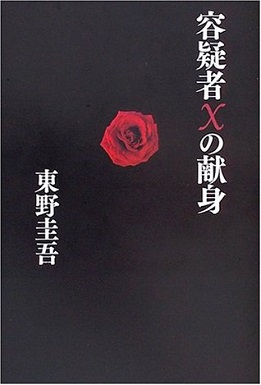
The Devotion of Suspect X by Keigo Higashino: Book Review

Hello, readers! Welcome to a new blogpost after a gap of nearly three years.

Ever since I had started my job and stepped into the actual adult life, things have been a bit difficult to manage. With my work schedule and my impulse to do everything under the sky; I've been stretched a bit thin over the past few years. Especially when it comes to tasks like writing a full review or article, my focus has been difficult to capture to stay on it.

Adult life can be strange. We're meant to do something, but our hearts and bodies are always at a crossroads. And there's this constant feeling to always stick to what's right as your actions now have real and far reaching consequences. And there's just so much to do out there- you got a career to manage, a healthy lifestyle, a social life and your own mental peace. I don't know if I'll ever get used to this life.

Anyway, lest I digress further, let's come back to the post at hand- the review of a book I read last year but kept on putting off writing about it- until now. Since it's been a while, I may not be able to as eagerly capture and express all my opinions as I could've immediately after reading it but I'll try to keep the review honest.


The Devotion of Suspect X is a novel in the famed Detective Galileo series of novels by master suspense author- Keigo Higashino. The book tells the tale of Yasuko and Misato Hanaoka- Mother and Daughter duo and their neighbour- the brilliant mathematician Tetsuya Ishigami and devious homicide cover-up.

The plot, much like other Keigo Higashino stories is not just about a whodunit. Infact, now I'm starting to believe it must be a well-liked trope for the author to establish it at the beginning of the story that who the killer is. Given this is just my second Higashino novel, I'd say I'm starting to like it quite a bit. Because despite the lack of a 'who did it' mystery, we're still treated to a thorough and fleshy storyline about establishing the circumstances which lead us to the end.

I'd say the story starts off a bit slow. We're transported to urban Tokyo into the lives of Yasuko, a former bar girl who now lives with her daughter and works at a bento shop. Yasuko is a conventional beauty and still enamour the men who get close to her. After a few failed attempts at love and a failed marriage, she lives a modest and humdrum life with her daughter. That is, until her former gambling addict and alcoholic husband finds his way back into their lives. The key character of the novel- Yasuko's neighbour and gifted mathematics professor- Tetsuya Ishigami is one of the people who've fallen for Yasuko.

When tragedy strikes and leaves the mother daughter duo in a quandary- with the charge of murder against them, Ishigami steps up to help them.


All of this and what actually happened on the night of the murder up till the killing is very well established in the first few chapters. With the audience fully informed of the facts and who did what. Even the motive is quite clear and simply established.

But the real conundrum, motivations, actions, go far cavernous than we realise as we delve deeper and deeper- chapter into chapter through the investigation. By the time police discover the corpse- the game is already won by the talented Mr. Ishigami.

The police eventually do reach Tetsuya and Yasuko but have absolutely no clue on linking the crime to the perpetrators. And as reluctantly as it is, Police Detective Kusanagi has to enlist the help of his brilliant friend and physicist- Manabu Yukawa aka Detective Galileo.

As much as the pair is uncomfortable with each other and their methods, they still manage to get along and work on the side of the law. As it turns out- the primary suspect has a relation with Professor Yukawa and both get along well.

What ensues is a battle of wits, misdirection, espionage, meticulous examinations of each and every available evidence and timeline. At every step, Ishigami is ahead of our detectives.

The only weak link is probably Yasuko who finds it difficult to live and get by like Ishigami has asked her to. Feeling it too difficult to bear the burden of the crime. Constantly worrying about the next move. But our amazingly calculating professor Ishigami has factored in every possible probability and put in place a plan which makes it impossible to implicate Yasuko in the murder

Page after page, the book is so well crafted and riddled with anticipations that it's difficult to put down. Which I like to believe is the biggest quality of a good suspense novel.

By the end, we get to experience a twist so profound and unexpected despite all facts shared with the readers that it's almost cathartic. The realisation is so overwhelming that we have to put the book down for a minute and let the joy, surprise and utter brilliance of this masterful piece of work sink in.

But that is not the end. Delightfully enough, even after the zenith of our storyline, the author doesn't just leave us after the big reveal. The end beyond the mystery is something which truly opens our eyes to a whole new perspective and justifies the title of the book and the titular 'devotion' of the 'suspect x'. Before the ending, it's simply impossible to actually discern the true meaning of those words. And the enormously heartfelt heaviness that they carry.

The whole book establishes the entire surroundings and characters pretty well yet the ending gives us insights into their psyche that unravels their deepest secrets and determination to us. This was an experience which I'd recommend to every mystery fan out there and to check out this book if you haven't already.

All in all- great characters, amazing opposing protagonists, plot, twist, and ending. A wonderful read throughout. If you’re a fan of the genre and looking for an irresistible storyline with your mind blown with the utter sense of emotional outcry at display while involving great clever minds of geniuses trying to outwit each other at every move; then this book- an excellent take on the ‘how to get away with murder’ concept is a must-read for you.


Tuesday, 29 October 2019

The Wind-up Bird Chronicle By Haruki Murakami: Review


I must say, Wind-up Bird is a quirky affair. The only thing unsurprising about this book is that being a Murakami novel, I already knew what I might be getting into and I was prepared for it. A strange fact about this book is that you cannot explain the plot in short to anybody. While looking online for a synopsis before buying this book, I came across many inconsistent storylines. Some said the book is about a missing cat, or a missing wife, some said it was about a mysterious hotel. Well, after reading 607 pages of this book, I can say, none of them is entirely wrong. Welcome, everyone, welcome to the reality where I’m reviewing this book. As a tribute to the bizarre style of this book and questionable nature of the protagonist and actual events, I’m not going to follow my usual system of reviewing, instead I’ll just let it flow however it goes.

This is a funky, peculiar and weird book about naked women, lost animals and engulfing darkness. An endearing dog with the personality of a despicable human being but somehow becomes endearing when he’s a dog with massive testicles. This book is by no means is an easy read. There was violence in the most graphic sense explained to the point not only the characters wanted it to stop but the readers as well. And then the sexual encounters which were there to convey something not entirely sexual but displayed it in a rather erotic sense. And then the sexual events which I’m not sure were sexual or not. There were multiple moments in the book when certain people lick the face of somebody but why, no one knows. Whether that's some sort of fetish thing or was it related to some sort of hidden connection between things, we can only wonder.

As I mentioned earlier, the plot of the book is hard to explain like most Murakami novels and isn’t anywhere written in the most absolute sense. I had earlier decided to try to put it here in the most appropriate way possible but I have now decided otherwise. If the mystery surrounding the story is concealed that way then I will let it stay buried. The story is about a guy trying to find a missing cat. The cat comes back after a long time but without ageing a day, like it never went anywhere. But by this time, the protagonist’s wife has left him. Without a word or indication, she just left. He tries to find her in an imaginary hotel. On parallel, a soldier narrates his experiences through the Russian-Japanese conflicts during war days. There is a whole slew of other funky characters around- A psychic sister duo, a crazy teenager, a very handsome but taciturn man and many other fun characters coming up after every few chapters. The wind-up bird is much about symbolism and contrast amongst its own recurring characters and the similar experiences they undergo and how their different actions shape up very different realities for them. Similar animate and inanimate objects keep popping up in the series of events in different countries and time periods.

Murakami has given detailed descriptions of every little thing in this novel almost to the point where it seems like he’s got no interest in continuing the main story. It seems the author’s intention is to make the reader go round and round so much that they feel so engrossed with the perspective of the narrator to the point where they can experience his tractability and care less about the outcome of events and their anticipation matters much less than the strange events which led up to them. What is the mainstream story and what is a digression is a question the reader shouldn’t ask for their own good. One thing I noticed about this book was the protagonist’s obsession with noticing the appearance of people. Even almost till the very last page of the book, the man cannot keep himself from describing every single thing which was worn by everyone in any particular scene and then his opinion about it. For a character as passive as Toru Okada (the main character), if things had not been happening at the course as they did, he couldn’t have done anything at all. In his own words, he tries his best to avoid public or experiences which require an act of will. As in contrast, the characters very much mirror each other too. In a certain case, two very important characters, look exactly the same beneath the neck. And they both become sexual interests of Toru Okada. Toru Okada is particularly notable for having no notable quality. Had he been a food, he’d be cheese. If he was a music genre, he’d be elevator music.

The book starts with much anticipation into the unknown but ends up giving something very visible and believable. I like this book because of how much it actually goes into the elements of fantastic surrealism, entering into a world full of creatures rather creatively made up with characteristics beyond the bounds of rationality and yet at the same time makes it all seem tiny in front of the reality of things. Maybe that’s what true surrealism is like; when you aren’t able to distinguish it from reality. And then the consequences incurred upon reality by those mystical events are very much palpable and comprehensible.

The true power of this book lies in its portrayal of each event leading into the next. It flows almost exactly like a well-made TV series. With cliff-hangers and cleverly thought out scenes, wild characters and colourful scenarios; it would be an utter waste of effort if the reader isn’t capable enough to imagine everything right in front of them. In this sense, again the book isn’t an easy read. If you cannot think about the music scores mentioned in the book or the historical events, then you feel like you’re missing out on part fun.
After a while, it becomes more and more unclear to the characters which is real and which is not but just then the readers become vividly aware of the fact from dreams sequences.

The novel is as much wrapped in mystery itself as the absolute darkness which engulfs the characters from time to time. From beginning till the end, it’s almost as if we never move from one place but get to observe widespread dimensions of fascinating far away places. Murakami rightly captured the essence of any epic yet personal adventure which takes us to places new and supernatural yet continuously being connected to the emotions of the characters involved. Nothing moves or changes unless there is a strong sentiment behind it. And on the other side, if there is a feeling of any sort regarding something then great big actions will happen almost by chance. Fate is as much a character in this story as any other. It’s presence is like a breeze in an open plain with no leaves to move; just the icy cool feeling touching your skin every once in a while and making you desire a more warmer outfit.

At the end, I'd like to say, that reading it was a total delight and the book is worth every inked page. If you want something quite unlike anything, this is your book.

Two of my favourite quotes from the book:-
“What we see before us is just one tiny part of the world. We get in the habit of thinking, this is the world, but that’s not true at all. The real world is a much darker and deeper place than this, and much of it is occupied by jellyfish and things.”
“Nothing so consumes a person as meaningless exertion”


"The author feels he writes only for himself and no one else"
-Anurag Singh

“You don’t need to be an actual celeb with millions of fans to feel like one.”
- the revered author himself 

"The author has changed his insta username to match one of the characters is really liked in the novel."


Monday, 30 September 2019

Murder of Roger Ackroyd by Agatha Christie: Review


This is the first Hercule Poirot mystery I’ve ever read by Agatha Christie and oddly enough it’s about a period when he’s already retired from active duty. Our detective may have given up on a life riddled with crime and corpses but they sure don’t seem to leave him alone. Even in his solace and monotonous country life, he’s called in to solve a murder which occurred nearby. And he gladly accepts, to break the humdrum schedule of his if nothing else.

As the title suggests, the story is apparently about the Murder of Roger Ackroyd. Who happens to benefit a whole lot of people by conveniently dying at the right moment. Every character we encounter in the novel is a suspect at some point or the other and some are till the very end. Yes, it’s true you won’t be able to guess who it is. But quite honestly, the reveal did not so much excite me as I wished to. The who, has taken a rather creative approach in this story which if I relate to the stories that came after it with the same element would spoil the surprise of my readers who are yet to read this novel.
As it always is, somebody soon feels the involvement of police to be inadequate and soon calls upon the detective, monsieur Poirot- a very bold yet sensitive detective who’s ruthless about finding out the truth at any cost but still thinks about the people involved and their best interests. Poirot, unlike Sherlock, isn’t a detective who notices so many multi-folds than the average person. Poirot is the detective who looks at every aspect of things and specializes in discovering inconsistencies.

“Précisément!”, as the detective exclaims quite so often soon as he’s come up with an idea which makes all the jumbled pieces appear to be in conjunction with one another.

Agatha Christie also specializes in something. Just like her detective. And that’s making the perfect build-up from one chapter to the other in the most straightforward fashion possible without the aid of delving deeper into the layers of the story or characters. She simply unfolds the untold stories which was in the gaps left by her earlier. She is the sort of writer who does not make the narrative more expansive or dense but just stretches it out to help us all see what was hidden earlier. Not in plain sight though, that would’ve been the characteristic of Sir Conan Doyle, but Agatha simple let’s her characters branch out their story-lines which in turn help the detective and the reader reach the apparent truth. And a lot of deductions are based on testimonies in King’s Abbot, which I find interesting as King’s Abbot is described as a place full of gossip-mongers.

The story unfolds with revelation after revelation. One by one all our characters come clean to Poirot one way or the other. The only thing that lefts to find out is who killed the rich man who left a lot of money and a lot less problems for a lot of people. Interestingly, aside from all the traditional yet intriguing storytelling, the author does something which I found unique and also a great way to hide the actual culprit. That is the USP of this book, I suppose. Nobody can guess who the actual killer is. Infact, the author’s done such a good job of hiding him/her that it feels somewhat dis-satisfactory when we actually find who it is. That person is so established as a ‘certainly not killer’, that it’s hard to accept them for who they are. That is probably the only reason why I did not like the ending of this particularly enjoyable murder mystery.

You'll practically memorize this map by the time the book is done
Hence, I’d recommend everyone to give this book atleast one read. And if you’re a Christie fan already then it’s a must read. Even though you think you might know her very well but she’ll succeed in fooling you. But after everything’s said and done, my favourite Christie still remains ‘And then there were none’. And there wasn’t even a detective in it to unravel the mystery. It all just was so satisfying to observe. Anyway, Murder of Roger Ackroyd is a very different sort of novel than that. More of a straightforward and ‘conventional’ detective mystery. But it’s a pleasant read nonetheless.


"Decisions taken in anger never lead to anything good."
                                           - The revered author himself

Tuesday, 17 September 2019

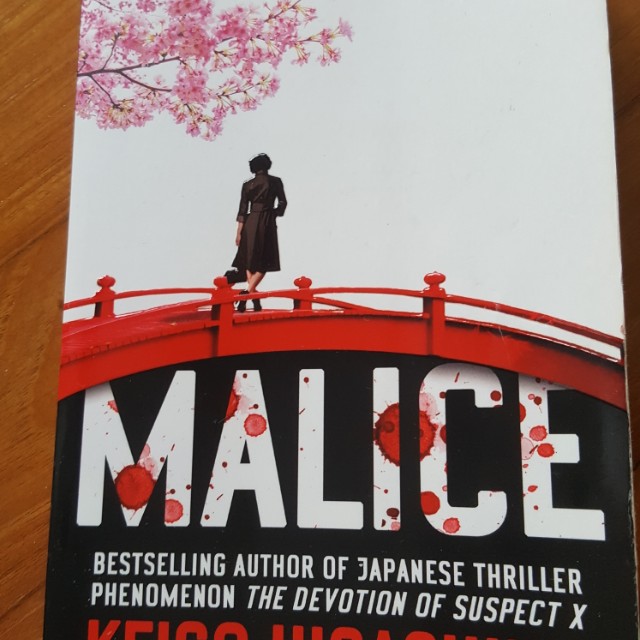
Book Review: Malice by Keigo Higashino


The book isn’t a murder mystery. Well, technically it is but it isn’t about finding who committed the murder. Infact the killer gives himself up quite soon. As correctly mentioned by Detective Kaga, the story is about establishing the perfect motive.

But why, why would somebody care more about the reason behind committing such a heinous crime instead of being spared from the consequences of the crime? This is where our mastermind killer comes in. He, who wanted to establish himself as a particular character in his own story and in the minds of the public. And he, who almost got away with it too. Almost.

The story is about two childhood friends- Kunihiko Hidaka and Osamu Nonoguchi. The story is also about two young teachers who taught at the same school- Osamu Nonoguchi and Kyiochiro Kaga. It’s also about two books. The childhood friends both grow up to become writers. One a famous novelist with multiple awards under his name and another, a far less recognised children’s author. One day, the famous author, Hidaka Kunihiko is killed at his own home. With no suspect in sight and both suspects having perfect alibi, it is up to detective Kaga to find the culprit. But it isn’t long before the actual murderer is caught. It happens at almost the very beginning. But then, what keeps the police awake at night and going round and round in circles? The absence of a motive. With the killer keeping it always under wraps and lying at every step, Detective Kaga struggles to uncover the truth. But, in a novel, gripping to the very last page, we ultimately do uncover the real truth and the actuality of the situation.

The book, Malice, is in no way about only finding the killer. But that’s what it makes it so well written. Even without the whodunit, we are kept curious till the very end. With developments one after the other, it’s hard to keep this book down without truly finding out what was the intention behind the murder. There are infact several plots in the single story which dealt with the theme.

Out of the numerous entangled themes, one which forms the basis of the eponymous malice is the human desire to see others suffer. Which is most commonly observed in little children bullying others for no reason at all. This is mentioned several times in the book with multiple sets of children. Infact, this theme is studied from various standpoints just to piece together as to why someone would do something like this to anyone. But to the utter dismay of both the reader and detective, the reason is ‘just because’. There are instances so horrible and torturous that it would upset anyone who reads about it, but we all know deep down how it gets with young children and no example mentioned here is too far-fetched to imagine. All those of us who’ve experienced bullying as kids in some form or the other may even sympathise with some of the characters. This ‘just because’ and the cruelty of humans is what’s shown by the author as the true malice in the human character which manifests itself from a young age. The murderer is somebody who just couldn’t get rid of this feeling and ultimately decides to commit a dreadful crime.

The book is a great read for anyone looking for realistic detective action with a palpable but incredible twist. The book is a must for fans of the genre and a highly recommended read for anyone else. The killer, which arguably is always the most important character in a thriller, is a brilliant one. Although by the time we discover the killer’s true intentions and the genuine persona who’s plotted the murder, the novel nears its conclusion. So we are not given too much insight into the persona from the killer’s own perspective, hence is almost feels a waste at the end to have such a person being discovered but not being able to hear his own take on it. Nevertheless, maybe that’s intentional, so that the image we’ve formed throughout the novel of the murderer stays with us and the shock of the twist is even more profound. The book really holds you down till the very end. Even when you think everything is over and all threads have been closed, the writer introduces elements which give the exceptionality to this story which made it such a big hit worldwide.

"The author's obsession with always engaging himself has now led him to the world of murder mysteries and he isn't going to stop anytime soon."
 

"Shades without a beard is barely half the look"
                                                                  -the revered author himself 
 

Thursday, 22 August 2019

Invisible Man: Review


Another sci-fi classic by the famed author who practically defined the genre. The book is fairly simple in its setting by today’s standards when the invisibility trope has been depicted so many times through various media. But this novel was perhaps the one which gave birth to a scientifically elaborate story about a guy who turns himself invisible.

The story is probably already etched in everybody’s mind but it still deserves a recap for some of our oblivious readers. It’s about Griffin, a scientist who has devoted himself to research into optics and invents a way to change a body's refractive index to that of air so that it neither absorbs nor reflects light and thus becomes invisible. He successfully carries out this procedure on himself, but fails in his attempt to reverse it. The story is horror fiction and circles around the people who encounter Griffin and his eventual descent into madness and immorality.

I always saw the story about a person who was misunderstood. Ofcourse, Griffin was also in himself an enthusiast of random and irresponsible violence but his descent into a full blown megalomaniac could’ve been avoided. He tried approaching his old colleague, Dr. Kemp for help in trying to find a way to reverse his condition but to no avail. The townspeople all turned against him and tried to incarcerate or kill him.

The story was written masterfully by HG Wells, and one could truly visualise everything which was happening in the story. Which is kind of ironic considering it’s about a person who cannot be seen. HG Wells introduces a sense of mystical awe in his stories while still trying to keep them grounded to the real thing. He introduces scientific theories and explanations to impossible phenomenon so that they don’t look totally ridiculous. But as any good author, the real sense of danger and sentiments come from the events which are fully possible and almost mirror the actual world. He showcases the tendencies of real humans in extraordinary situations. How some overcome it and how some are consumed by it.


Griffin is the prime example of how a power can corrupt even the most intelligent of men. It isn’t directly implied that the painful procedure he underwent while trying to become invisible would’ve also altered his psyche. That would’ve made him more prone to engage in violence as means to achieve his objectives and eventually enjoying the violence itself.

The book may not be as engaging as other works of HG Wells but is most certainly a bonafide read for all the fans of the author or the genre out there. What I believe the book lacked was a resolution. The end was appropriate what would’ve happened given the situation but not something which could’ve happened had the stakes been higher in the story and how grand a character of Griffin was. Maybe I’m a bit biased for the bad guys but I expected Griffin to either become a normal sane human being again or become a real evil incarnate with far greater reaching consequences of his actions.

Anyway, this book would be recommended by me to any sci-fi horror fan who would like to experience how innumerable iconic characters from pop culture came into being from a snow ridden small town which had a man covered in bandages disrupt local peace. 

Thursday, 10 January 2019

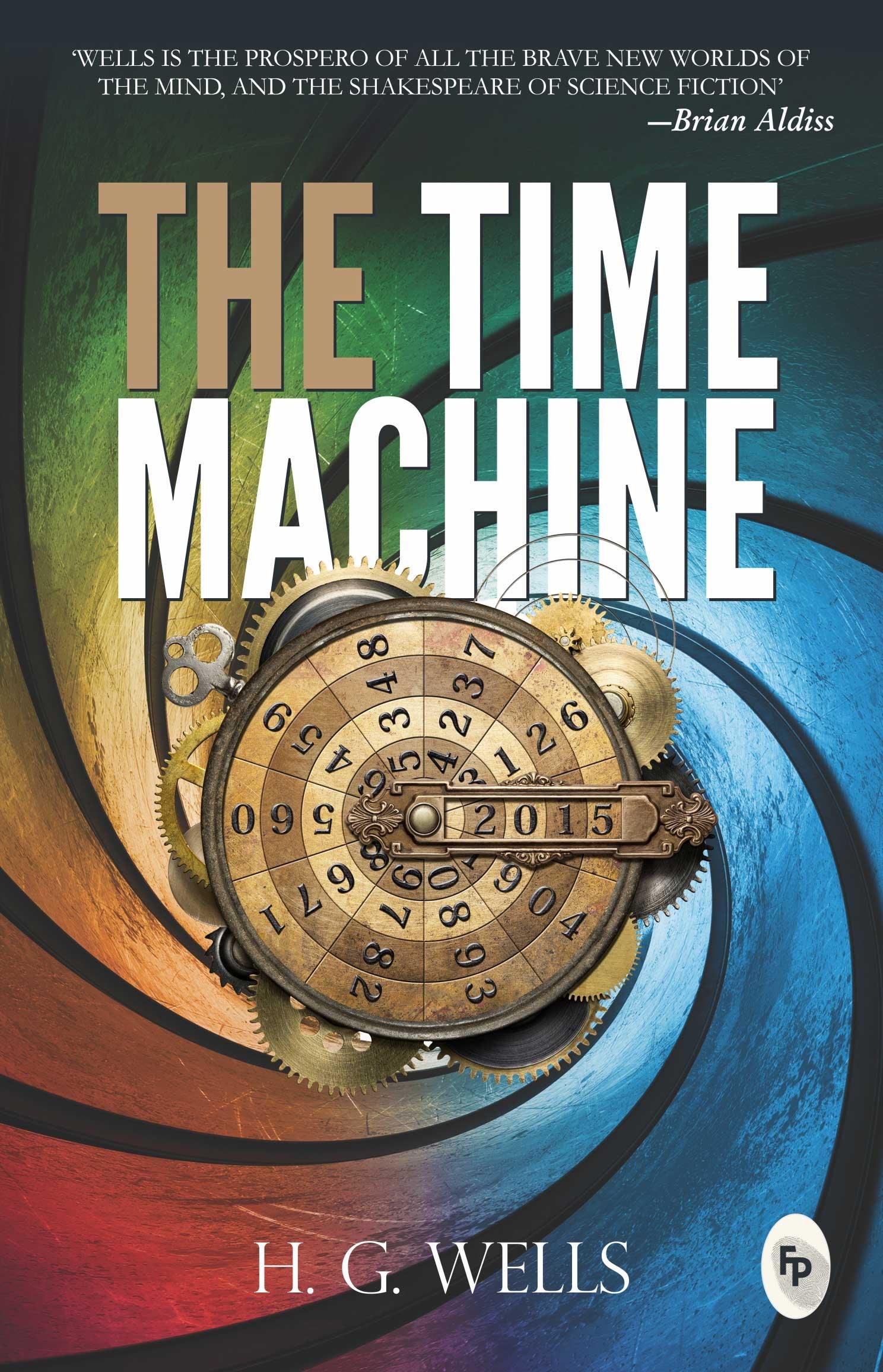
The Time Machine: H.G Wells- Review


“I grieved to think how brief the dream of the human intellect had been. It had committed suicide.”

Said the narrator of our story while pondering upon the state of what’s left of humanity or any sentient (if they can be even called that) life on earth, millions of years in the future. Welcome everyone to the review or rather a reflection of what I just witnessed, as one of the most known books on the planet of all time. Written by the father of science fiction, HG Wells, I recently got a chance to read the classic which gave rise to innumerable adaptations and innovations ever since it was first published in 1895. The author came up with an idea and a device which, more than a hundred years later, is a common occurrence in fiction works. Movies, TV series, books; once Wells put the idea of Time Travel out through a Time Machine of sorts, the idea has only continued to gain recognition and sculpted through various means into things ranging from a DeLorean to merely travelling through the mind. I mean it when I tell you that some of the greatest works of art wouldn’t have existed without HG Wells.


In the year, 802,701 A.D., civilisation as we know it has vanished. The world is ruled by only nature and vegetation is all anyone can see anywhere. Forests and some remains of long vanished structures. No animals or humans or insects are left. There exists only two opposing yet interdependent races- The Eloi and the Morlocks.

The Eloi, the time travelling narrator deduces to be the descendants of the upper class humans and the Morlocks are the working class living far beneath the earth. All inhabitants of this world have now lost any sense of intelligence and are only governed by their habits. There is no sense of curiousity or any inclination towards any sort of knowledge at all.

The Eloi spend are akin to children of present, as the narrator suggests, and are only interested in anything for a short while. They play, sing and dance and funnily make love. They are small and waifish and only eat fruits. They don’t use any language presently known to man but have devised their own distinct tongue. Their intellect has been reduced to that of young kids and cannot comprehend anything too complex. They rejoice seeing the narrator light a few matches because fire being an alien concept to them now. They are harmless and only know how to play, give flowers to each other and be at peace. The narrator concludes that when true peace and pacifism took over, the humans who no longer had a conflict with anyone or anything became such fragile and simpleminded creatures. He argues when there is no need of change, human intellect becomes redundant.

The Morlocks, quite contrary to the Eloi, carry more resemblance of the wild beasts of past. But undoubtedly, the narrator assumes, that they are descendants of humans as well. They have just evolved to the conditions they have been used to for millennia. They’ve lived in the underground darkness for so long that their skin has turned pale white and their eyes, large greyish and red. They can see well in darkness but cannot tolerate the daylight anymore.

The narrator consistently speculates the state of affairs and the events that led to this. He, at first, is perplexed as to where the Eloi get their food or clothes as they are a race with no skill at all. Meanwhile, why do the morlcoks come out at night? He hesitantly comes to a ghastly truth. That both these races share a somewhat symbiotic relationship. The morlocks provide food and clothes for the Eloi and in return they feed on them. Why or how this system came into being, would be a fruitless discussion now. The narrator concludes all this is now happening purely because of force of habit and without conscious thought by either race. Morlocks are just as brainless as the Eloi but remember how to manufacture things because that’s all they’ve been doing for probably centuries now. He concludes, that this must have been a huge a class system separating the worker class of the underground and the elite upper class but now the tables have turned and the elite have turned into food for the underground dwellers.


The book is filled with nihilism and remorse in a world of our own making yet of hardly any semblance to our own. This is a future, as the narrator says, we couldn’t even have imagined. All those wars, technology, literature, desperation, desire and yearning for advancement were just a colossal waste now. Utterly senseless in this passive new world. Everything ever created by man had vanished. Even man himself is reduced to feeble creatures with no significant thought process or beasts of the dark with no morality. The book questions how futile then the actions of man are in the long run while we continue behave in same vile manner giving no thought to the legacy we’ll leave. But time conquers all, as is the general opinion of the time traveller and hence it was always futile to worry about legacy in the first place. Over the forces of space and time, nature may sustain but human effort certainly dwindles away into oblivion.

All in all, the novella, is one of the greatest and sincerely one of the first attempts of the venture of human mind into time travel through science fiction prose. The story follows through the disorderly, distraught, anxious yet resourceful narrator into a wild adventure taking us to times and places which are a bleak but conceivable fancies of future.

Hence, if you haven’t already, give this short book a chance and discover the roots of science fiction and time travel which established such a niche, developing a genre in itself.
The novella gorgeously ends with emphasis on the fact that humans may have vanished from this planet but humanity lives on.


“And I have by me, for my comfort, two strange white flowers - shriveled now, and brown and flat and brittle - to witness that even when mind and strength had gone, gratitude and a mutual tenderness still lived on in the heart of men.”

Wednesday, 26 December 2018

Book Review- And Then There Were None by Agatha Christie


Here we are! Reviewing another classic and a mystery of utter master-class beyond all doubt.
‘And Then There Were None’ is a renowned work of mystery fiction and quite possibly the archetype for so many suspense horror media that followed since it was first published with the similar idea of an isolated island and strangers dying one by one.
But the magic of the original hasn’t yet faded away and likely won’t ever. The story is still platinum grade fiction and edge of the seat thriller with each chapter being as much of a reveal as it is a precursor to the impending mystery.
I won’t delve too much into the plot as it is already quite well-known at this time. But to give a framework, it is about ten strangers, each of whom is guilty of a terrible murder and is invited by some mysterious figure to an isolated island or one reason or the other. No person is actually aware of who their host actually is and neither did they know any of the others in the group. It is later found out that what ties them together is that each one of them was involved in a murder in some capacity, if not, directly causing it. They all were guilty but their crimes were such that they could not be punished under the provisions of law and hence a madman had now taken it upon himself to render justice.


One by one, each of the crimes unfold in quite a masterful manner. The group grows suspicious more and more as people reduce. They argue, they fight but cannot prevent the inevitable. And some great theatrical tricks add to the drama and tension like the disappearing china figures and the nursery rhyme in each of their rooms which somewhat dictates how each of them will die.
And the mystery goes on till the very last page of the novel. One keeps on guessing but ends being as confused as the inhabitants of the island. At the end it is extremely satisfying to finally uncover the true culprit and how they managed to do it all. Even the Scotland Yard is baffled!
The best thing about the novel is how it takes the simple premise to its conclusion so eloquently. The idea is original and fantastic but the story is never caught up too much in it. Despite having ten different main characters, the story perfectly manages to let the reader get adequately familiarised with them along the progression of the mystery.
It does start with too many names to remember and too many things to keep track off but soon you’ll find yourself invariably stuck inside the whole plot with as much palpable tension as of each of our diverse characters.

To sum it up, the novel is an exciting read. If you’re a person who wants to derive amusement out of the literary medium, look no further. This is a delight guaranteed!
So anyone looking for a short break from the mundane everyday life and wants to experience what true thrill is and what a book is capable of through the mystery genre, then Agatha Christie is your saviour.

Thursday, 8 November 2018

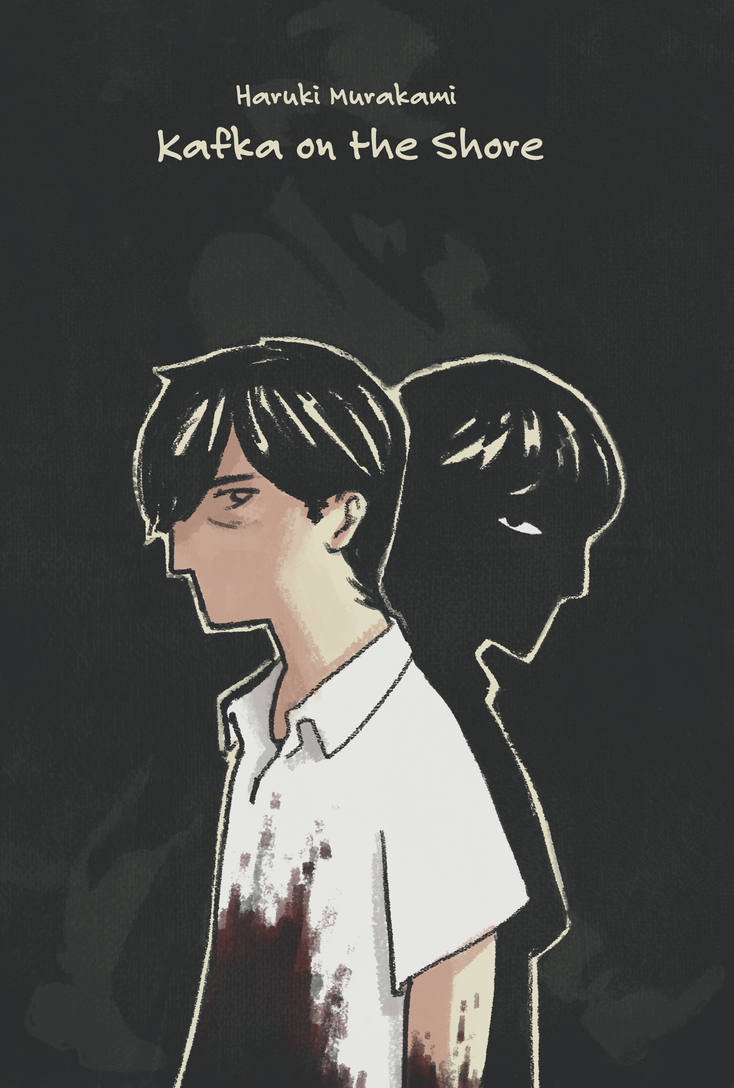
Book Review- Kafka On The Shore (2002) by Haruki Murakami


Kafka on the Shore (2002), is a fascinating read with a weird story, atypical characters and bizarre situations. When you’ve actually read it, you feel complete even though many story arcs have been left hanging mid-air. That is probably the best thing about Kafka On The Shore. The story builds on its fantastical happenings and mysticism without having to rely on the reader to be able to understand it fully. And as readers, we are also able to delve deep into this surreal dream without necessarily trying to de-tangle this whole mish-mash of suspense in the narrative.

The Story
The plot majorly revolves around the quests of multiple characters, mainly circling back to the inevitably entwined lives of Mr. Nakata, a very old but not-so-bright guy who can talk to cats; and Kafka Tamura, the 15 year old kid who wants to run away from his home and his father. Both of them do things they’ve never done before, meeting the right people and ending up just where they need to be. Rather evidently, as they both suspect, there is some higher power or fate at play here. They give in to the capricious inklings of fate and reside to play their part without anyone trying to comprehend things much. Hence the reader is left just as clueless and is expected to reside in the happenings of fate as well without questioning anything or asking for an explanation.

The plot is filled with colourful and almost unbelievable characters like Miss Saeki, Oshima, Sakura, and Hoshino. Each of which ends up being a favourite without any ill feelings towards anyone. But in a story like Kafka, belief and the reliance on facts seems somewhat illogical. The story is about losing yourself and your sense of being in a dream, in a song, in a painting with meaning beyond what words can explain. So it’s best not to question anything at all and just enjoy this peculiarly sentimental odyssey of confused yet committed characters.

The characters
Miss Saeki- If composure and elegance had a face, they’ll probably look like Miss Saeki. She is painted in such a manner that you cannot associate certain characteristics with her like impulsiveness, loudness, rudeness; even if you wanted to. She exudes class, mesmerising everyone who ever lays eyes on her. No matter how old is she in a particular scene, 15/19 or over 50. She is almost ageless in her splendour.

Mr. Nakata- He is gifted in ways more than he can count probably. Even though Nakata considers himself to be very stupid, he does have a special ability to talk to cats. He is devoid of any complex emotions and cannot read/write due to an accident in his childhood. He is on a quest he is unaware of. Yet he does what is required of him when the situation calls for it and just mysteriously knows when what has to happen.

Kafka Tamura- The wannabe toughest 15 year old in the world. Kafka is somebody who is independent and only ever finds solace in reading. He does not speak much, he is careful and keeps on encountering good people who care about him. You could say that in a twisted sense of the word, he is quite lucky but the unknown keeps on tormenting him throughout, until he accepts and embraces his true self.

Oshima- A fan favourite character who is densely packed with knowledge and virtues but never once seems to be ostentatious. He does his job with pride and deals with all the patrons rather humbly unless somebody particularly picks at his ideals. He helps Kafka and forms a strong bond with him throughout the story and acts as the guide to lead Kafka from the darkness of obscurity to lights of the known world, to his roots. 

Hoshino- The only regular human being in the entire narrative, it seems. Sporting a ponytail, chunichi dragons cap and aloha shirt; Hoshino is the camaraderie of Mr. Nakata, who comes to put absolute faith in his quest and actions. He doesn’t always understand what is happening around him or why is it happening but never shies away from a daunting task and stays by Mr. Nakata’s side, till the very end.

The novel is filled with many more utterly interesting characters like Sakura, Johnny Walker, Colonel Sanders, The boy named Crow, Mimi the cat, etc. Each of them stands for the unique quirk they lend to the story aside from being the central figures in the fair play of destiny. They play their roles well in being the mediums assisting the protagonists getting closer to their end and sheltering them or providing information when required. They are like guides or auxiliary companions who may not have a set position in the arena but it will fall apart without them.

Themes
Kafka on the Shore is all about individual experiences of each of the characters. It is not an adventure story. It isn’t exactly about the suspense or explanations about why things happened the way they did. Kafka at the end of it all, is about self-acceptance and moving ahead in life no matter how things in your past remain. It tries to reason with the ideologies that your past may not always be perfect, it may always pull you back into it, but you must strive forward and live out your natural life in the real world. There will be pieces of you torn away and kept locked in the past forever but that just makes you a new you who is more mature than the older one, capable of better things. Metaphors aside, the actual personification of this act is Mr. Nakata who loses half his shadow, his ability to read and write, his intelligence but gains the exclusive ability to talk to cats. Miss Saeki spends an entire lifetime mourning the death of her lover but still welcomes death rejoicing her time which she did get to spend with her lover. Kafka Tamura is plagued by the terrible oedipal curse put on him by his father but learns that this isn’t all that defines him and hence shouldn’t let this singular thing dictate his whole life.

Various thematic devices are touched upon throughout the novel. Music playing a catalyst in situations to complement the transition of characters from their earlier mundane selves to a deeper understanding and awe of the world around them. Art plays a major role in numerous forms. Classic films, paintings, home décor and the set-up of the dreams are all described to be aesthetically reminiscent of other-worldliness.

A particularly lovely scene when Mr. Nakata is looking a missing cat


The story spans ages but also reaches a point where time is of little consequence. And at such a point when even the most fundamental truths of human existence hold little to no significance, expecting the story to address materialistic concerns which held meaning earlier, seems a bit far-fetched. Kafka On the Shore is about finding meaning when there is none. It is about living; about dreaming and living in those dreams. They aren’t always pleasant. They aren’t always complete. But they are the toil of your pneuma, rising from the inmost fibres of your soul. They embody your desires, your fears and your aspirations. And with a tinge of magic, you see the reality Kafka experiences.

Reverberations
Kafka on the shore is shaped like a normal curve experiencing its highest point during the middle. If you are somebody excessively pragmatic who looks for a well-defined structure with a beginning and an end, if you are somebody who looks for logic and reason behind every action, then probably the book would leave you feeling betrayed and wanting for more as it doesn’t ever tie any lose ends. But if you’re somebody who believes in the power of imagination, and that all things might happen for a reason but aren’t always sensible; then you’ll enjoy the novel in its entirety for what it is. A surreal, dream-like fantasy to the brim, and the overflow marked by elements of reality which highlight the irrational in contrast with the believable. There are speaking cats, noiseless flutes, and immortal sentries to have us keep our sense of wonder intact, along with more mature themes of solitude, loss, and existentialism. Although what sets Kafka on The Shore apart from the rest, is the book’s innate ability to curb curiosity at every brink of discovery and yet coming up with newer surprises so as the pace is almost never lagging. And as for the more visceral parts of the novel, it’s as Sada said, “If you can’t get it across in words then it’s better not to try.”


The author purposefully left out commenting on certain events in the novel to preserve the first-hand experience feeling for people who haven't read it yet a.k.a 'no spoilers'. 

(the book was once a part of a strange thing which happened to the author, ironically enough, at a library)


Saturday, 15 September 2018

The 80/20 Principle by Richard Koch: A Review


The book talks about a pattern which has baffled professionals like economists and investors since forever. This pattern is observed everywhere and nobody can explain why. The author talks about the 80/20 rule. A strange phenomenon which states that a lot is actually a by-product of a lot less. It states that how only 20% effort is required to get 80% results; how only 20% of our actions constitute repercussions which shape 80% of our lives. Using this principle, the author suggests a way to excel in life, both personal and professional. He also shares some business tips and tactics to succeed in career as well. He starts with explaining how pervasive the 80/20 principle is. He states the actual statistics might differ but the gist of it remains the same- “A lot more, was once a lot less”. He explains how our regular way of life is absolutely absurd if we’re looking to bring about drastic positive change in our lives. Then he also explains business strategies in purview of the same and how employees and employers can extract the most from their skills to achieve critical success for their organisation. But mostly, for the later part the book covers the universal nature of the rule and how to use its influence in our lives in the most positive manner possible.


The author asks the audience to work less but work in a manner to get noticed and earn more. Similarly he suggests to give little time but with full attention to personal relationships to strengthen them and make them act as a pillar of support in your life instead of being another source of stress. The author eccentrically enough asks the readers to forget time planning and undergo a total overhaul of their schedules; be lazy but be competent; employ unconventional investment strategies, etc. Then he asks the audience to believe in their sub- consciousness and don something which they inherently find pleasant.
All in all, I found the book a very interesting read. The author is not only insightful but also humorous and even radically innovative at times. The chapters in the middle about running a business through the 80/20 principle might not appeal to everyone as they have some technical terms and processes but the rest of it was a very well thought after effort on the part of the author in order to give us his life’s wisdom of succeeding though a weird but powerful phenomenon- the 80/20 principle.


The 7 Habits Of Highly Successful People by Stephen Covey: A Review


The book talks about how one can ensure victory in both personal and professional life by following 7 simple rules as stated by the author in the title. Firstly, he gives an overview of the rules which are meant to be employed and followed in real life and the individual should ingrain them in their routine. These habits would them allow the person to live their lives to the fullest and realise their actual potential and unlock unprecedented levels of happiness.
The book is divided into four parts- Paradigms and Principles; Private Victory; Public Victory; Renewal. The first and the last parts talk about how principles may affect the lives of individuals and how to keep practicing them. It also gives a synopsis of sorts before actually coming to the habits. It explains how changes in perception might lead to drastic paradigm shifts. Parts two and three are the actual principles in action and how they help an individual evolve into a better version of themselves.
The seven principles/habits are:- Be proactive; begin with the end in mind; put first things first; think win/win; seek to understand, then to be understood; synergize; sharpen the saw. Habit one, two and three deal with winning over our own nature. They are about how to understand ourselves and then effectively put ourselves into action. They are about harmony with oneself. They talk about how we should be somebody who takes initiative. They explain that in order to get something done, somebody has to do it. They explain how to plan effectively and prioritize our tasks in a fashion which is most lucrative.


Then the habits four, five and six are about utilising the developed personality and a better sense of planning in order to achieve personal and professional goals. They talk about the ideal social behaviour and leadership qualities. Starting with thinking about the needs of others at the same level as our own needs and employing a successful win/win strategy. They the author asks the readers to empathise with the public a lot. He asserts that one can only expect to be understood if he/she is willing to put themselves in others’ shoes as well. After being empathetic he states it is also quite important to come together in order to complete tasks. Cooperation is the key to collective growth as the author insists. The final habit- Sharpen the saw is about living a balanced life and appreciating the good things in it and being grateful for them. It suggests how to keep enacting the rest six habits for the rest of our lives for a healthy brain/body.
The book was a remarkable read in terms of engagement and writing style. Although some chapters in between are rather slow but it soon picks the pace. The author successfully provides some very useful and relatable anecdotes from his own life to help the reader form a better connection with the content. Lastly, it was quite intuitive and praise worthy. Not to mention the practical applications of the book which would undoubtedly benefit the reader in multiple ways.